

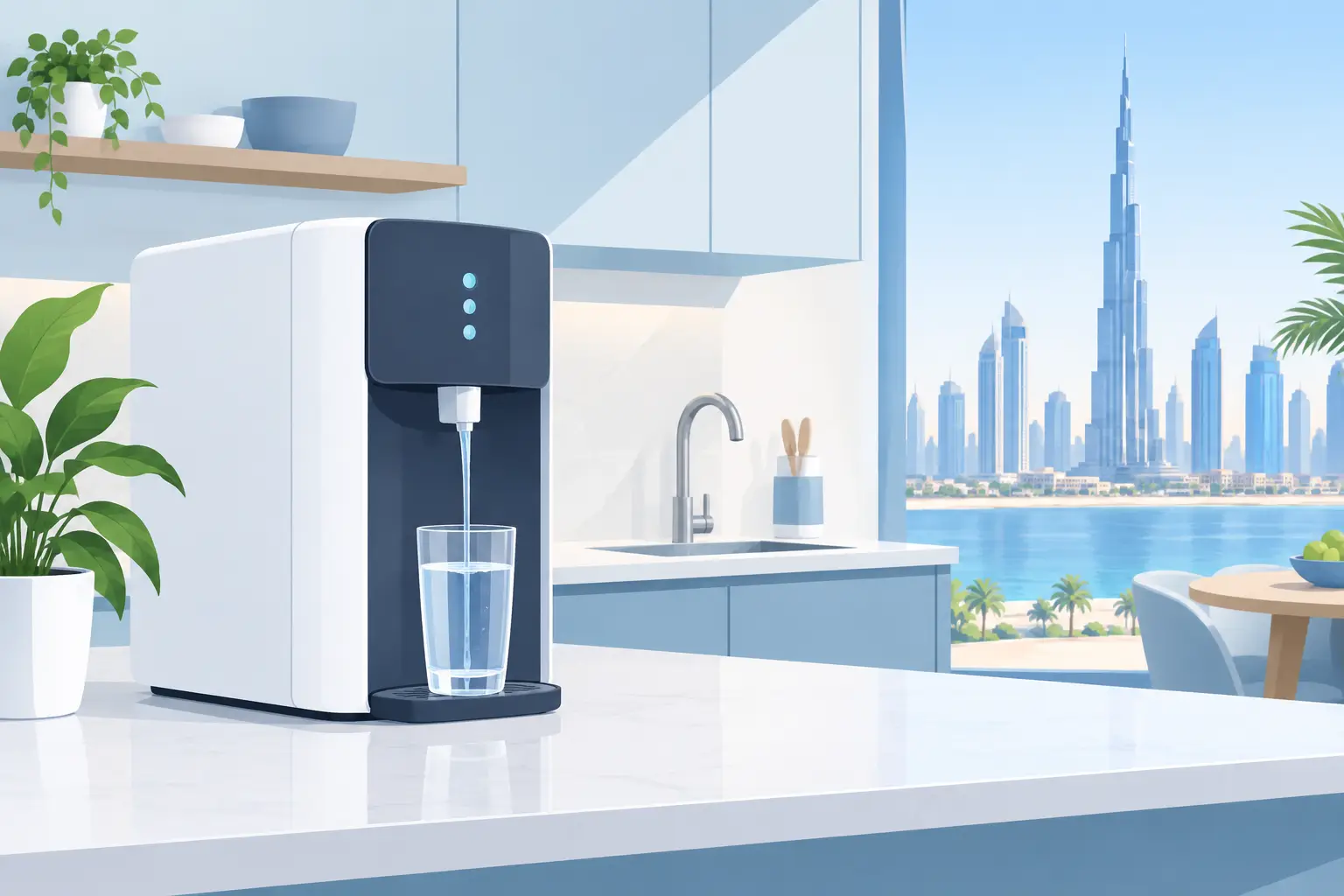
Water Purifiers for UAE Homes: What Matters Most
A glass of water can look perfectly clear and still leave homeowners wondering about its taste, dissolved solids, or the condition of the filters behind the tap. That is why water purifiers are not simply another kitchen appliance for UAE homes. They are a practical part of daily drinking-water planning, especially when the system is selected for local water conditions and looked after properly.
The right setup should suit how many people use the home, where the system will be installed, and how much purified water is needed each day. Just as important, it should come with clear installation and maintenance support. A high-capacity unit is not automatically the best choice, and a low upfront price can become expensive if replacement filters and service are difficult to arrange.
What Water Purifiers Do at Home
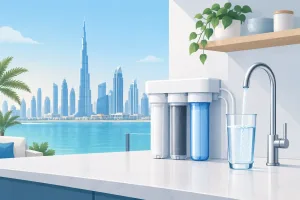
Most home purification systems are designed to improve drinking water at a dedicated kitchen tap. A reverse osmosis, or RO, system is a common choice because it uses a membrane to reduce many dissolved substances in the water. It is typically supported by pre-filters that capture sediment and help protect the membrane, followed by a carbon stage that can improve taste and odor.
This multi-stage approach matters because each component has a different job. Sediment filtration helps manage particles such as sand, rust, and pipe debris. Carbon filtration addresses chlorine-related taste and odor concerns. The RO membrane handles a finer level of dissolved solids reduction. Depending on the system, a final post-filter may refine the water before it reaches the faucet.
A purifier should not be treated as a one-time purchase. Filter condition, feed-water quality, pressure, and daily usage all affect performance. A system that was working well a year ago may need attention even if water still flows normally.
Start With Your Household’s Real Water Demand
Capacity is usually shown in GPD, meaning gallons per day. This figure helps indicate how much purified water a reverse osmosis system can produce under suitable operating conditions. For a small apartment or a family that mainly uses filtered water for drinking and cooking, a compact 400 GPD under-sink system may be a sensible fit.
Larger homes, busy kitchens, staff accommodations, cafes, offices, and facilities may need more output. Systems in the 800, 1,500, 3,000, or 5,000 GPD range are built for higher demand, but capacity should be chosen carefully. A large system requires suitable space, plumbing access, drainage, and a service plan that matches its use.
Think about demand at the busiest time, not only average consumption. If several people fill bottles, prepare meals, make tea and coffee, and use a dispenser during the same period, a small system may feel slow. On the other hand, paying for commercial-level output in a low-use apartment may add cost and complexity without improving daily convenience.
Under-Sink Systems and Whole-House Filtration Solve Different Problems
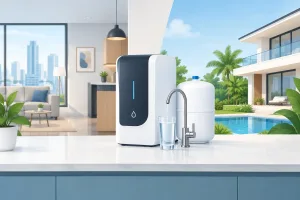
An under-sink RO unit focuses on the water you drink and cook with. It is often the most direct option for homeowners who want purified water at the kitchen faucet without changing every water outlet in the property.
Whole-house filtration works at the incoming water line, treating water before it reaches showers, appliances, bathroom taps, and kitchen fixtures. It can be useful for villas, properties with visible sediment concerns, or households that want broader filtration support. A water softener may also be considered where hard-water minerals contribute to scale on fixtures, water heaters, and appliances.
These systems can work together. Whole-house filtration can protect plumbing and improve water quality throughout the property, while an RO system provides a dedicated supply of purified drinking water. The best combination depends on the property, water concerns, and budget.
Why Installation Quality Matters
Even a well-designed purifier can perform poorly if it is installed incorrectly. The technician needs to assess cabinet space, water pressure, pipe connections, drainage, electrical needs where applicable, and access for future filter changes. A neat installation is not only about appearance. It makes servicing safer and faster later.
For apartments, the system needs to fit around existing sinks, storage, and plumbing without making the cabinet unusable. For villas and commercial sites, the work may involve pump requirements, larger storage arrangements, or more complex inlet connections. This is where a site assessment can prevent surprises after purchase.
Professional installation also gives customers a chance to understand the basics: which faucet supplies purified water, when filters are likely to need replacement, and who to contact if flow slows or a leak is noticed. Clear handover is a small detail that makes ownership much easier.
Do Not Judge Water Quality by TDS Alone
TDS, or total dissolved solids, is a useful measurement, but it is not a complete picture of water quality. It indicates the amount of dissolved material in water, not exactly what that material is or whether it presents a concern. A low TDS reading can be one sign that an RO system is reducing dissolved solids, but it should not be the only reason to choose or assess a purifier.
Taste, odor, sediment, filter age, water pressure, and laboratory testing when required also matter. If a household has a specific concern, such as unusual taste after building maintenance or visible particles from plumbing work, it is better to explain that concern to a water-treatment professional than rely on one meter reading.
The same principle applies to claims about capacity and performance. Real output can vary with incoming water temperature, pressure, and filter condition. Honest advice should account for these variables rather than promise the same result in every property.
Maintenance Is Part of Clean Drinking Water
Filters have a service life because they collect material and gradually lose effectiveness. Leaving them in place too long can reduce water flow, affect taste, place extra strain on the RO membrane, and make the whole system less dependable. Replacement timing depends on water usage, incoming water quality, and the type of filter, so a fixed schedule is only a starting point.
Watch for changes such as slower filling, a different taste or smell, leaks under the sink, unusual pump noise, or an alert from the system. These are good reasons to arrange a check rather than wait until the unit stops working.
For customers who do not want to track every filter date themselves, an annual maintenance contract can be a practical option. It creates a regular service path for inspections, filter replacement, cleaning where needed, and support if a problem appears. Aqua Care provides this kind of end-to-end approach, including installation, warranty coverage, and ongoing service for systems matched to UAE conditions.
Questions to Ask Before Choosing a Purifier
Before approving a system, ask whether it is sized for your household or facility, what filtration stages it includes, and where it will be installed. Confirm what is included in the quoted price, especially delivery, installation, faucet fittings, warranty, and the first service period.
It is also worth asking who will replace filters, how quickly support is available, and whether original replacement parts will be used. These questions are not extras. They help separate a dependable water solution from a unit that becomes difficult to maintain after installation.
For landlords and facility managers, service responsiveness deserves special attention. A purifier that is out of service can affect tenants, staff, customers, and daily operations. Choosing one provider for equipment, installation, repairs, and maintenance can reduce unnecessary delays and finger-pointing between suppliers.
Clean drinking water should feel straightforward: a properly sized system, fitted by trained technicians, with service available when it is needed. The best time to plan for filter replacement is when the purifier is installed, not when the kitchen tap starts giving you a reason to worry.

About author


Add comment