
When to Change RO Filters for Clean Water
A glass of water can still look clear when an RO system is overdue for service. That is why knowing when to change RO filters should not depend only on appearance or taste. In Dubai and across the UAE, water quality, household use, storage conditions, and inlet TDS can all affect how quickly filters become loaded and how well your reverse osmosis system performs.
A properly maintained RO system helps reduce dissolved solids, sediment, chlorine-related taste, and other unwanted contaminants from drinking water. But each filter has a specific job and a limited working life. Replacing filters at the right time protects water quality, keeps water flow steady, and helps prevent premature damage to the RO membrane.
When to Change RO Filters: A Practical Schedule
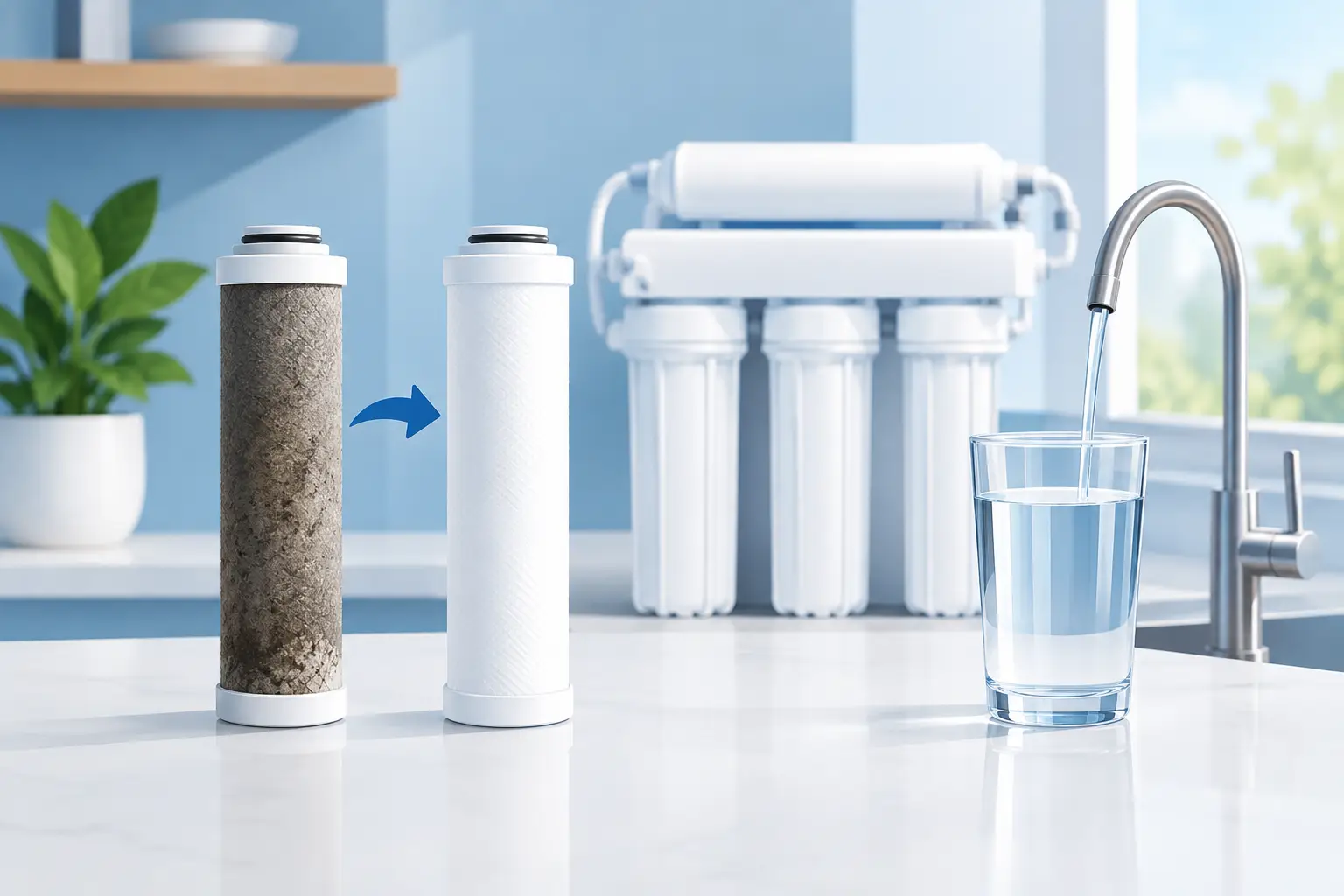
For most home reverse osmosis systems, pre-filters should be replaced every 6 to 12 months. The RO membrane commonly lasts 18 to 36 months, while the final post-carbon filter is often changed every 12 months. These are useful starting points, not fixed rules for every property.
UAE water conditions can shorten or extend these intervals. A family using the system heavily will use filters faster than one or two people in an apartment. Villas with older plumbing, areas with higher sediment levels, or systems connected to a water tank may also need more frequent pre-filter changes. Commercial systems and high-output units should follow a service plan based on actual daily production, water testing, and operating pressure.
The most reliable approach is to pair a routine replacement schedule with attention to how the system is behaving. Waiting until water quality clearly declines can mean the filters have already stopped protecting the membrane as effectively as they should.
Know What Each RO Filter Does
A standard RO drinking-water unit normally contains several filtration stages. Understanding them makes replacement timing easier to manage.
The sediment filter is usually the first stage. It catches sand, rust, dust, pipe debris, and other visible particles before they enter the system. In areas where incoming water carries more sediment, this filter can become clogged well before the usual replacement date.
Carbon pre-filters follow. They help reduce chlorine, odors, and unpleasant taste. This matters because chlorine can harm many RO membranes. A carbon filter may look normal from the outside while its capacity is nearly used, so it should be changed on schedule rather than judged by appearance.
The RO membrane is the main purification stage. It separates a large portion of dissolved salts and contaminants from the water. It has a longer life than pre-filters, but only if those pre-filters are doing their job. Letting sediment or chlorine reach the membrane can reduce its effectiveness and lead to a more expensive replacement sooner.
Many systems also have a post-carbon or polishing filter after the storage tank. This is designed to improve the final taste and freshness of drinking water before it reaches the faucet. It is generally replaced once a year.
Signs Your RO Filters May Need Replacement Sooner
Scheduled service is the safest choice, but your system may show signs that it needs attention earlier. The clearest warning is slower water flow from the RO faucet. A clogged sediment filter, worn pre-filter, low tank pressure, or membrane issue can all reduce output.
A noticeable change in taste or smell is another reason to arrange service. RO water should taste clean and neutral. A chlorine-like taste, stale odor, or unusual flavor may point to exhausted carbon filters or an overdue post filter. Do not assume that boiling water will solve a filtration problem. It does not restore filter performance or reduce dissolved solids.
Rising TDS can also indicate that the membrane is losing rejection performance. A technician can compare the TDS of incoming water and purified water to assess the system properly. One high reading alone does not always mean the membrane has failed. Changes in feed-water TDS, pressure, temperature, and meter calibration can affect results. What matters is the system’s ongoing rejection rate and whether it is producing water within an appropriate range.
Other signs worth checking include frequent tank refilling, water leaking around filter housings, unusual pump noise, or a system that runs for long periods without shutting off. These issues may not be caused by filters alone, but they should be inspected promptly to avoid wasted water and further damage.
Why UAE Homes Often Need Regular RO Service
Municipal water in the UAE is treated, but it can pass through building tanks, pipes, and household plumbing before reaching your kitchen. Water quality at the faucet can vary by building, location, tank maintenance, and the condition of internal pipes. In some homes, high TDS is a key concern. In others, sediment from tanks or plumbing is the more immediate issue.
This is why a one-size-fits-all filter schedule is not always enough. An apartment with a well-maintained building water system may have different needs than a large villa supplied through multiple tanks. A busy household that fills bottles, cooks daily, and uses an RO dispenser will also consume its filtration capacity faster.
For facilities, offices, restaurants, and staff accommodation, the stakes are higher. A delayed filter change can disrupt daily operations, reduce output, and put added load on high-capacity RO equipment. Tracking service dates, water production, pressure, and TDS readings is more dependable than waiting for complaints about taste or flow.
Do Not Replace Only the Filter That Looks Dirty
It is tempting to replace a visibly discolored sediment cartridge and leave the other stages for later. While a dirty sediment filter definitely needs attention, changing all scheduled pre-filters together is usually the better decision. Carbon filters do not always show visible signs of exhaustion, yet they may no longer provide sufficient chlorine protection for the membrane.
There is also a cost trade-off. Replacing pre-filters on time is generally more affordable than replacing a damaged RO membrane early. Regular maintenance helps preserve flow, improve consistency, and reduce unexpected service calls.
That said, not every visit requires a full system overhaul. A trained technician should assess the filter condition, water pressure, tank performance, connections, and TDS readings before recommending membrane replacement. Honest service means changing what is due and investigating the real cause when performance is not where it should be.
A Simple Maintenance Routine for Homeowners
Keep a note of your last filter replacement date, either on the system itself or in your phone. If your system was installed with an annual service plan, schedule the next visit before the due date rather than after a problem develops.
Between service visits, check for leaks under the sink, listen for changes in system noise, and notice whether the faucet flow has slowed. Keep the area around the unit clean and avoid moving the tubing or filter housings unnecessarily. If you are away from home for an extended period, ask your service provider whether the system should be flushed or checked when you return.
Avoid buying cartridges simply because they look similar. Filter size, micron rating, carbon type, membrane capacity, and system connections must match the equipment. Incorrect or low-quality filters can cause leaks, poor performance, and unnecessary membrane wear.
When to Call a Water Filtration Technician
Call for professional support if water flow suddenly drops, TDS rises consistently, the unit leaks, the pump runs continuously, or you are unsure when filters were last changed. This is especially useful after moving into a new home, taking over a rental property, or inheriting an existing RO unit with no service history.
Aqua Care can assess systems designed for UAE conditions and provide the right replacement filters, installation support, and ongoing maintenance. For homeowners, that means less guesswork about compatible parts and service intervals. For facilities, it means a clearer plan for protecting equipment and keeping drinking water available.
Clean drinking water should not depend on guessing whether an old cartridge has a few more months left. Set a service date, watch for performance changes, and let the condition of your water system guide the next filter replacement.

About author



Add comment