Best Compact RO Systems for Apartments and Villas
A compact RO unit can fit neatly below a kitchen sink, but that does not make every small system right for the job. The best compact RO systems balance available cabinet space with reliable daily output, effective TDS reduction, and service that remains simple after installation. For apartments, villas, and rental properties across the UAE, choosing well means looking beyond the size of the unit.
A reverse osmosis system is designed to reduce dissolved salts, sediment, chlorine-related taste and odor concerns, and other unwanted impurities from drinking water. In a region where water quality, storage tanks, and plumbing conditions can vary from one property to another, the system should be matched to the home rather than chosen by appearance alone.
What Makes a Compact RO System a Good Choice?
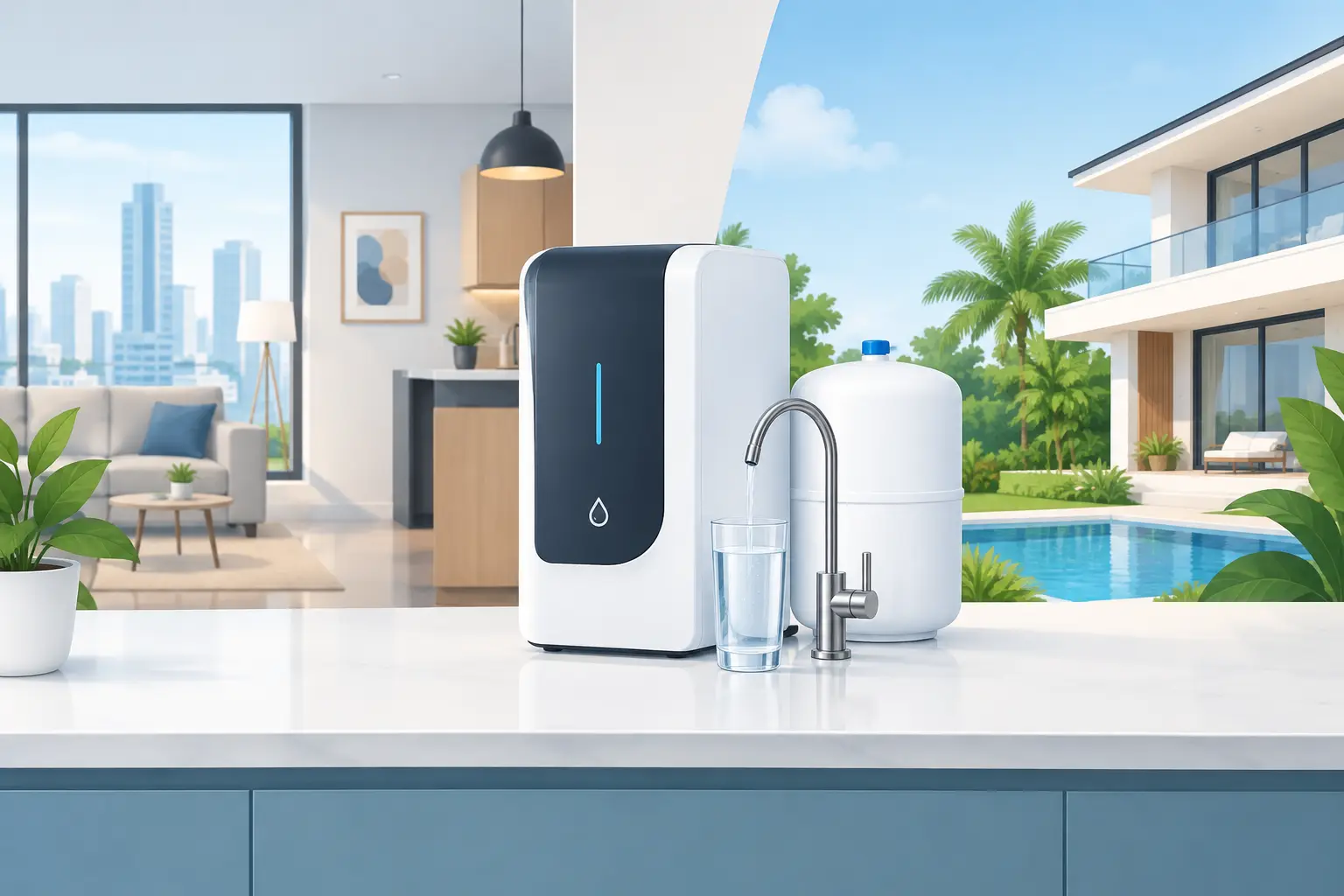
Compact usually refers to the installation footprint, not weak performance. Many under-sink systems place the filtration stages, booster pump, and connections in a narrow layout that leaves useful room for cleaning supplies or kitchen storage. Some use a separate storage tank, while tankless designs produce filtered water on demand and save even more cabinet space.
The right choice depends on household demand. A couple in an apartment may only need clean drinking and cooking water from one kitchen faucet. A larger family may fill several bottles every day, make tea and coffee frequently, and rely on purified water for baby formula or pets. In that case, a unit that looks compact but has limited output can become frustrating.
A good compact system should also have a proper multi-stage filtration setup, a suitable RO membrane, dependable pressure support, and accessible replacement filters. A low purchase price is less valuable if filters are difficult to source, the unit is poorly fitted, or service is unavailable when water flow slows down.
Best Compact RO Systems: Capacity Comes First
RO capacity is often shown in gallons per day, or GPD. This rating indicates how much purified water a system can produce under specified conditions. It is useful for comparison, but it should not be treated as a promise that the same amount will be available at every moment in every home. Incoming water pressure, temperature, membrane condition, and feed-water quality all affect real performance.
For many apartments and small households, a compact 400 GPD system is a practical starting point. It provides enough capacity for regular drinking, cooking, ice, and refill bottles without requiring the space or investment of a higher-output unit. A professionally installed 400 GPD RO system can suit a family that wants a dedicated point-of-use drinking-water solution at the kitchen sink.
Higher-output options make sense when daily demand is heavier. A busy villa kitchen, a shared accommodation property, or a small office pantry may need more consistent flow and faster recovery. The goal is not to buy the largest GPD rating available. It is to avoid the two common problems: paying for capacity that will never be used, or choosing a system that cannot keep up during the busiest parts of the day.
Tankless versus tank-based compact units
Tankless RO systems are attractive where cabinet space is tight. They generally have a slim profile, deliver water directly through a dedicated faucet, and can offer fast dispensing when matched to the right capacity. They are particularly useful in modern apartment kitchens where every inch under the sink matters.
A compact system with a storage tank can still be an excellent option. The tank stores purified water so it is ready for use, even when several glasses or bottles are filled in a short period. The trade-off is the added space needed beneath the sink. A technician should check cabinet dimensions, drain access, water supply connections, and the route for the faucet before recommending either design.
UAE Water Conditions Need More Than a Small Footprint
A compact RO system has to work with the water entering the property. UAE homes may receive desalinated municipal water, water that has passed through a building tank, or supply affected by older plumbing and local storage conditions. The water may be safe at the source yet still carry noticeable taste, odor, sediment, or elevated TDS by the time it reaches the kitchen.
That is why pre-filtration matters. Sediment filters help protect the membrane from fine particles, while carbon filtration helps reduce chlorine and improves taste. The RO membrane then performs the main dissolved-solids reduction. Skipping the assessment of these stages can shorten membrane life and lead to disappointing results.
Water pressure matters too. RO systems require sufficient pressure to push water through the membrane. Compact units with a booster pump are often a sensible choice where incoming pressure is inconsistent. If pressure is too low, purified-water production can slow considerably. If water quality is unusually challenging, the system may need a different filter arrangement or a more suitable membrane rather than simply a higher GPD label.
Do Not Choose by TDS Reading Alone
TDS, or total dissolved solids, is one useful measurement, but it is not a complete water-quality report. It shows the amount of dissolved material in water, not exactly what those materials are. A lower post-filtration TDS reading can indicate that an RO system is working effectively, but the ideal target and configuration depend on the incoming water and the intended use.
A professional water check can help establish a baseline before installation and give the homeowner a useful reference for future maintenance. It also prevents a common mistake: replacing a working system simply because a handheld meter gives a number that seems unfamiliar.
Taste is another practical indicator. Water that tastes clean and neutral encourages the whole household to drink more water at home. Still, taste alone should not be used to judge filter condition. Regular service is the more reliable way to protect performance.
Installation Is Part of the System
An under-sink RO unit needs more than a convenient empty cabinet. It requires secure water connections, a correctly installed drain line, a dedicated dispensing faucet, and enough access for future filter changes. Poor installation can cause leaks, restricted flow, unnecessary noise, or damaged cabinetry.
For renters, drilling and plumbing changes should be considered before choosing a model. For villa owners, it is worth thinking about whether the kitchen is the only point of use or whether a separate solution is needed for another pantry. A compact RO unit is intended for drinking and cooking water, not for every tap, shower, or appliance in the property. Whole-house filtration and softening solve different water problems.
Professional installation also makes maintenance easier. The technician can explain which filters need regular replacement, where the shutoff valve is located, and what changes in flow or taste should prompt a service request. This is especially valuable for households that do not want to manage fittings, membranes, and filter compatibility on their own.
The Ongoing Cost Matters as Much as the Unit Price
Every RO system needs filter replacements. Sediment and carbon filters are normally changed more often than the membrane, although the actual interval depends on water use and incoming water condition. Delaying replacements may reduce flow, affect taste, place extra strain on the membrane, and lower overall purification performance.
Before buying, ask what is included after installation. Confirm the warranty period, whether routine service is provided, the availability of replacement filters, and the response process if the system develops a fault. Free delivery and installation can reduce the initial hassle, but long-term value comes from clear maintenance support and qualified technicians who can service the same equipment they install.
For landlords and facility managers, this service record matters even more. A documented maintenance plan helps avoid avoidable tenant complaints and prevents small performance issues from turning into an emergency replacement.
A Simple Way to Choose the Right Unit
Start with the space below the kitchen sink and the number of people who will use the filtered-water faucet each day. Then consider whether a tankless layout is needed, whether the incoming water pressure is reliable, and whether the home has a history of sediment or high TDS readings. Finally, compare service coverage, replacement-filter availability, and the experience of the installation team.
Aqua Care can assess these details and recommend a compact RO configuration designed for local water conditions, with installation and ongoing support included. The best choice is rarely the smallest unit or the highest GPD rating. It is the one that delivers clean drinking water consistently, fits the kitchen properly, and remains easy to maintain long after the installation visit.


About author