

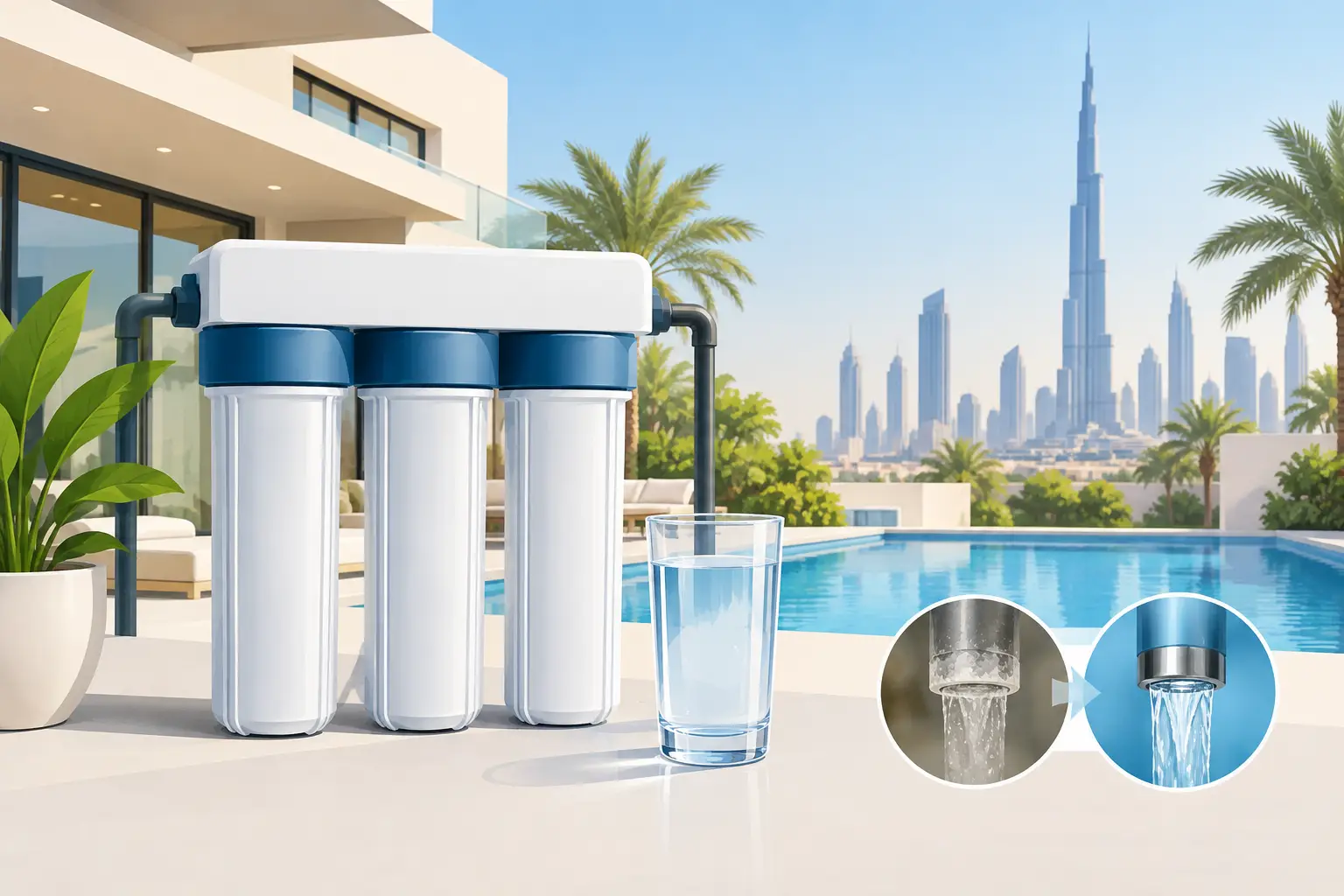
Best Hard Water Filters for Dubai Villas
A white crust around faucets, stiff laundry, spotty shower glass, and a water heater that seems to lose efficiency too soon are familiar signs of hard water. Finding the best hard water filters starts with one practical distinction: not every filter removes the minerals causing those problems. The right system depends on whether you want better shower water, protected plumbing, cleaner drinking water, or all three.
For homes in Dubai and across the UAE, the best result is rarely a one-size-fits-all product. Water quality can vary by building, storage tank condition, incoming supply, and household usage. A properly matched system, professionally installed and maintained, gives you more reliable results than choosing equipment based on price alone.
What Hard Water Means for Your Home
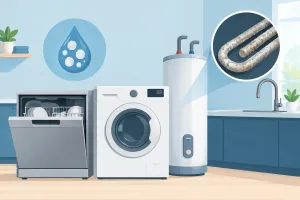
Hard water contains dissolved minerals, mainly calcium and magnesium. These minerals are not usually a drinking-water safety concern by themselves, but they can create scale buildup throughout a property. Over time, scale can affect showerheads, faucets, washing machines, dishwashers, water heaters, pipes, and glass surfaces.
You may notice that soap does not lather well, skin feels dry after showering, or towels become rough after washing. In villas and larger homes, the cost can go beyond daily inconvenience. Scale can reduce the efficiency of hot-water equipment and increase the need for cleaning, repairs, and descaling.
A water test is the sensible first step. Total dissolved solids, often called TDS, can provide useful information, but TDS alone does not confirm hardness. It measures the overall amount of dissolved material, not only calcium and magnesium. A water treatment specialist should consider hardness, sediment, chlorine, odor, and your household’s water use before recommending a system.
Best Hard Water Filters by Household Need
The phrase “hard water filter” covers several different types of equipment. Each solves a different part of the problem.
Water softeners for whole-home scale control
A water softener is usually the most effective option when mineral scale is the main concern. Traditional ion-exchange softeners replace hardness minerals with sodium or potassium ions. The treated water then flows to bathrooms, kitchen taps, laundry areas, and water heaters.
This is the right choice for villa owners, families with multiple bathrooms, or properties where scaling is visible across the home. It can improve soap performance, reduce residue on fixtures, and help protect appliances that regularly heat water.
The trade-off is that softeners require regular salt replenishment and periodic servicing. They also need proper sizing. An undersized unit may struggle during peak usage, while an oversized system can add unnecessary upfront cost. Your household size, number of bathrooms, water pressure, and daily consumption all matter.
Whole-house sediment and carbon filters for cleaner supply water
Whole-house filtration is valuable when water contains visible particles, sand, rust, or sediment from tanks and plumbing lines. A sediment filter captures particulate matter before it reaches fixtures and appliances. Carbon filtration can reduce chlorine, unpleasant taste, and certain odors.
These filters protect the home and improve general water quality, but they are not a replacement for a true softener when hardness is high. A sediment filter stops particles. It does not remove dissolved calcium and magnesium. Carbon improves the sensory quality of water, but it does not soften it either.
For many homes, the best setup is a staged system: sediment filtration first, followed by carbon filtration, then a softener where scale control is needed. This arrangement helps protect the softener and can extend the life of downstream equipment.
Shower filters for a focused bathroom upgrade
A shower filter is a practical option for renters, apartment residents, or anyone who wants a quick improvement without modifying the property’s main plumbing. It is installed directly at the shower connection and can help reduce chlorine and certain impurities that may contribute to dry-feeling skin or hair.
However, shower filters should be chosen with realistic expectations. Most are not designed to fully soften very hard water. They can improve the shower experience, but they will not stop scale buildup throughout the home or protect a water heater. They work best as a targeted comfort upgrade, not as a complete hard-water solution.
Reverse osmosis systems for drinking water
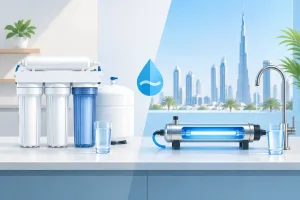
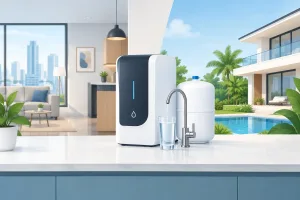
Reverse osmosis, or RO, is designed primarily for purified drinking and cooking water. It uses several filtration stages and a membrane to reduce a wide range of dissolved contaminants and lower TDS. For households concerned about the quality of water coming from the kitchen tap, an RO system offers a dedicated source of clean water for drinking, tea, coffee, food preparation, and baby bottles.
RO is not typically installed to treat every tap in the house. Whole-home RO requires a far larger, more complex setup than an under-sink drinking-water system. For most households, a water softener and whole-house filtration protect the property, while an RO unit provides high-quality drinking water at the kitchen.
Capacity matters here. A compact 400 GPD system may suit a smaller family, while homes with higher demand or frequent guests may benefit from higher-output options. The right capacity depends on actual usage, storage needs, and water pressure, not simply the biggest number available.
How to Choose the Right System
Start by identifying the problem you want to solve. If faucets and appliances are scaling up, prioritize a softener. If the water has sediment, odor, or chlorine concerns, add whole-house filtration. If you buy bottled water because you do not trust your kitchen tap, consider an RO system for drinking water.
Next, look at installation conditions. Apartment residents may have limited access to the main water line, while villas often have more flexibility for installing filtration and softening equipment near tanks or utility areas. Building managers and commercial properties need to consider peak flow, number of users, and service access so that the system does not restrict water pressure.
Do not overlook maintenance. Every water treatment system has consumable components. Sediment cartridges need changing when they load with particles. Carbon media has a service life. RO filters and membranes require scheduled replacement. Softeners need salt and occasional inspection. A system that is not maintained can lose performance, affect water flow, or become more expensive to repair later.
Questions to Ask Before You Buy
Before selecting a supplier or product, ask whether the equipment is suited to local water conditions and whether a water assessment is included. Confirm what installation covers, where the system will be placed, and whether electrical or drainage connections are required.
You should also ask about replacement filters, service response time, warranty terms, and ongoing maintenance plans. The lowest equipment price can become costly if replacement parts are difficult to source or no one is available when a unit needs attention. For a home system, reliable installation and after-sales support are part of the purchase, not extras.
Aqua Care can assess household needs and provide filtration, softening, RO installation, replacement filters, and ongoing service for customers who prefer one accountable provider from setup through maintenance.
A Better Way to Plan Your Water Treatment
The best hard water solution is often a combination rather than a single filter. A villa with scale problems and drinking-water concerns may need sediment filtration, a water softener, and an RO unit at the kitchen. An apartment renter may only need an RO system and a shower filter. A facility may require a higher-capacity filtration design based on demand and site conditions.
Choose the system that solves the water issue you actually have, then make sure there is a clear plan for installation, filter changes, and service. Clean water should feel simple once the right equipment is in place.


About author



Add comment