
RO Systems for Better Home Drinking Water
A kettle that develops scale quickly, water with an unpleasant taste, or an old purifier that no longer performs properly are not small household annoyances. They are signs that it may be time to look closely at your drinking-water setup. RO systems are a practical choice for homes and businesses that want more consistent, better-tasting water at the point where it is used most: the kitchen.
Reverse osmosis is not a one-size-fits-all purchase. The right system depends on how much water you use, the quality of your incoming supply, available installation space, and whether dependable maintenance is in place after installation. For UAE households and facilities, those details matter because local water conditions can put extra pressure on filters and membranes over time.
What RO Systems Actually Do
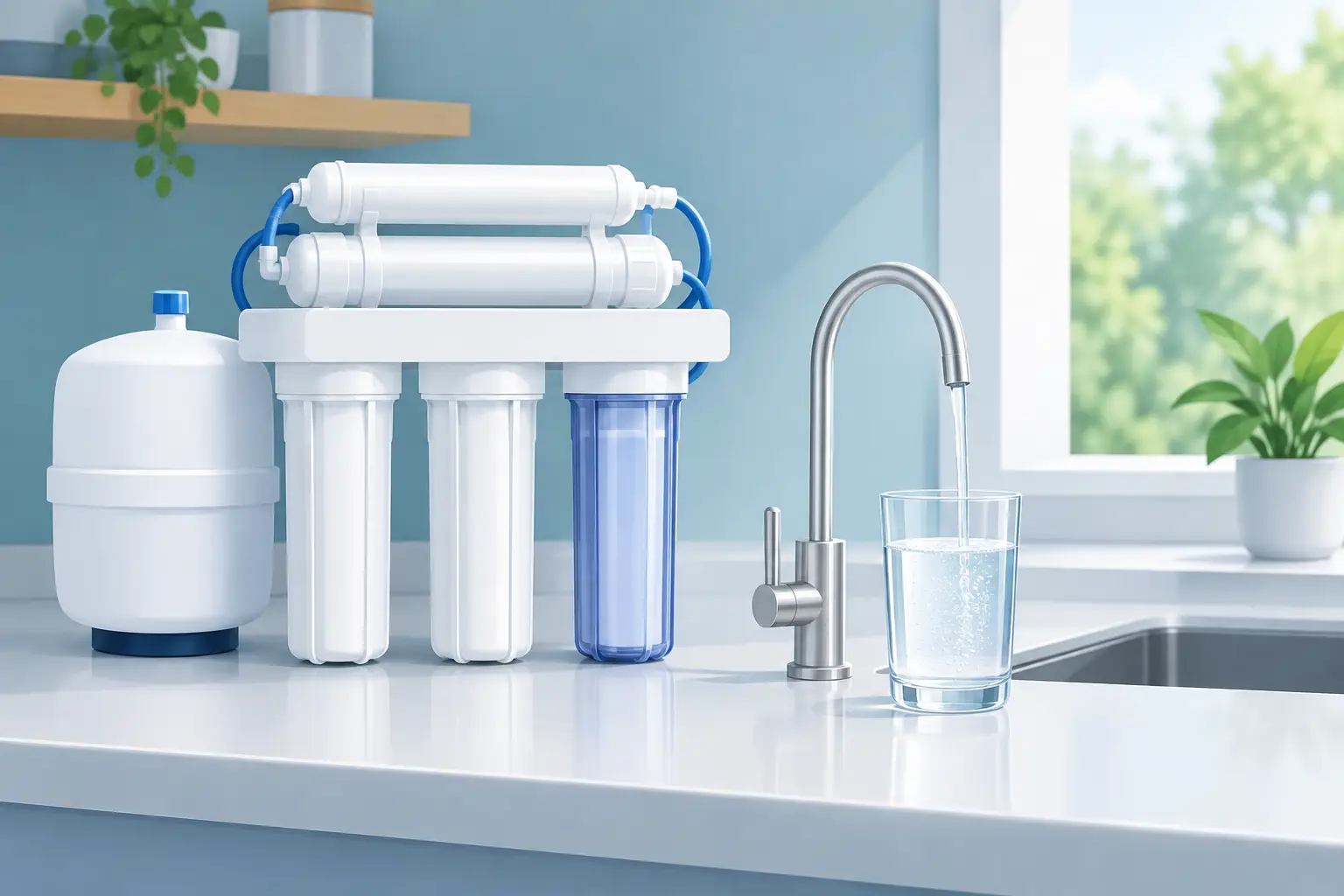
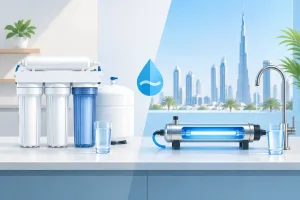
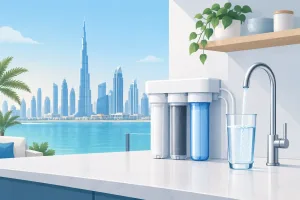
An RO system uses water pressure to pass water through a very fine membrane. That membrane reduces a wide range of dissolved solids, salts, and other unwanted contaminants. Before water reaches the membrane, sediment and carbon filters usually remove particles, chlorine, odors, and other material that could affect taste or shorten membrane life. A final carbon filter is commonly used before dispensing to improve the water’s taste.
The result is purified water for drinking, cooking, tea, coffee, ice, and baby food preparation. It can also reduce the reliance on delivered bottled water, along with the storage space and plastic waste that comes with it.
It is worth separating two ideas that are often confused. TDS, or total dissolved solids, measures the amount of dissolved material in water. A lower TDS reading can indicate that an RO system is working effectively, but it does not tell the full story of water quality by itself. Filter condition, membrane performance, proper installation, and regular service all contribute to a dependable result.
Choosing the Right RO System Capacity
System capacity is commonly shown in GPD, meaning gallons per day. A higher GPD rating does not automatically mean a system is better. It means the unit can produce more purified water in a day, which is useful when demand is higher or when several people need water throughout the day.
A compact 400 GPD system is often a sensible fit for an apartment or smaller household with normal drinking and cooking needs. It can provide a steady supply without taking over valuable under-sink cabinet space. For larger families, villas, or homes where water is used heavily for cooking, beverages, and ice, an 800 GPD unit may offer more comfortable daily output.
Commercial settings need a different calculation. A small office, café, staff pantry, salon, clinic, or restaurant may need a higher-capacity system so staff and customers are not waiting for purified water during busy periods. Systems in the 1,500, 3,000, and 5,000 GPD range are designed for these higher-demand applications, but sizing should be based on real usage, peak demand, storage requirements, and the site’s water pressure.
Buying too small can lead to slow dispensing and frustration. Buying far larger than needed can increase the upfront cost and use more space than necessary. A site assessment and an honest conversation about daily water use are usually more useful than choosing a capacity based only on the biggest number available.
Under-Sink Space and Water Pressure Matter
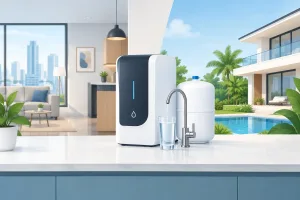
Before selecting a unit, check the practical details around the installation point. An under-sink RO system needs room for filters, connections, a faucet, and sometimes a storage tank. Tankless designs can save space and often provide faster water flow, but the best option still depends on cabinet layout, electrical access, and household demand.
Incoming water pressure is equally important. RO membranes need sufficient pressure to perform well. Some properties require a booster pump to maintain output and support efficient filtration. An experienced technician should inspect the location, test the feed water where appropriate, and make sure drain connections and piping are installed correctly.
Why UAE Water Conditions Change the Decision
Municipal water is treated before it reaches buildings, but it can still pick up dissolved solids, chlorine taste, sediment, or particles as it moves through tanks and internal plumbing. Building age, tank maintenance, pipe condition, and local supply characteristics can all affect what comes from a kitchen faucet.
That is why a system designed and configured for UAE conditions is more reassuring than a generic online purchase with no installation or service plan. The membrane, sediment stage, and carbon filters need to suit the incoming water quality. In some homes, a sediment filter or whole-house filtration system is a useful first step to protect kitchen appliances, showers, and the RO unit itself.
Water softeners can also be relevant, particularly where hardness causes noticeable scale on fixtures, kettles, water heaters, or glassware. A softener and an RO system solve different problems. Softening addresses hardness minerals throughout the property, while an RO unit focuses on purified water at a dedicated drinking-water point. Some villas and commercial properties benefit from both, while an apartment may only need a properly sized RO system under the sink.
Installation Is Part of Water Quality
A good RO system can underperform if it is installed carelessly. Poor connections can create leaks. Incorrect tubing routes can restrict flow. A neglected drain connection can cause avoidable problems. Even a quality system will not deliver its intended performance if old filters are left in place long after their service life.
Professional installation starts with placing the unit securely, connecting it to the feed-water line, fitting a dedicated drinking-water faucet where required, checking the drain line, and testing the system after startup. The technician should also explain basic ownership: where the system is located, what the indicator lights or meter readings mean, and when service is likely to be needed.
For homeowners, this makes ownership simpler. For landlords, facility managers, and business operators, it creates accountability. There is one provider to contact for installation, replacement filters, repairs, and planned maintenance rather than several different parties trying to identify the cause of a problem.
The Maintenance Schedule That Protects Your System
Filters and membranes do not last forever. Their exact replacement interval depends on water quality, system capacity, and how much purified water is produced. A busy family of six will generally use filters differently from a couple who are away for much of the day. A café or office pantry will have a very different maintenance pattern again.
Sediment and carbon pre-filters are usually changed more frequently because they protect the membrane from particles and chlorine. The RO membrane normally lasts longer, but its condition should be checked during service rather than assumed. Post-filters also need replacement to maintain clean taste at the faucet.
Watch for changes such as slower flow, an unusual taste or odor, a rise in TDS, leaks, or a system that runs for longer than normal. These are not always signs that the entire unit must be replaced. Often, timely filter service or membrane attention restores performance and prevents a more expensive issue later.
An annual maintenance contract can be especially useful for customers who do not want to track filter dates themselves. Scheduled service helps keep the system hygienic, identifies worn components early, and gives households and businesses a clear point of support when something changes.
Questions to Ask Before You Buy
Start by asking how many people will use the water and when demand is highest. Then consider whether the unit is for drinking water only or whether the property also needs shower filtration, sediment reduction, softening, or whole-house treatment. A kitchen RO system is excellent for purified drinking water, but it is not intended to replace every form of filtration in a large villa or commercial building.
Ask what is included with the purchase as well. Delivery, installation, warranty coverage, initial service, replacement-filter availability, and response times matter long after the technician leaves. A lower-priced unit can become inconvenient if compatible filters are hard to find or there is no qualified team available to service it.
Aqua Care matches RO capacity and filtration options to the property, then supports the system with professional installation, a one-year warranty, one year of free service, and ongoing maintenance options. The goal is not simply to place a purifier under the sink. It is to make clean drinking water easy to rely on every day.
The best time to plan your water system is before an old unit fails completely. A properly sized RO system, installed well and serviced on schedule, turns a daily concern into one less thing your household or facility team has to think about.

About author


Add comment