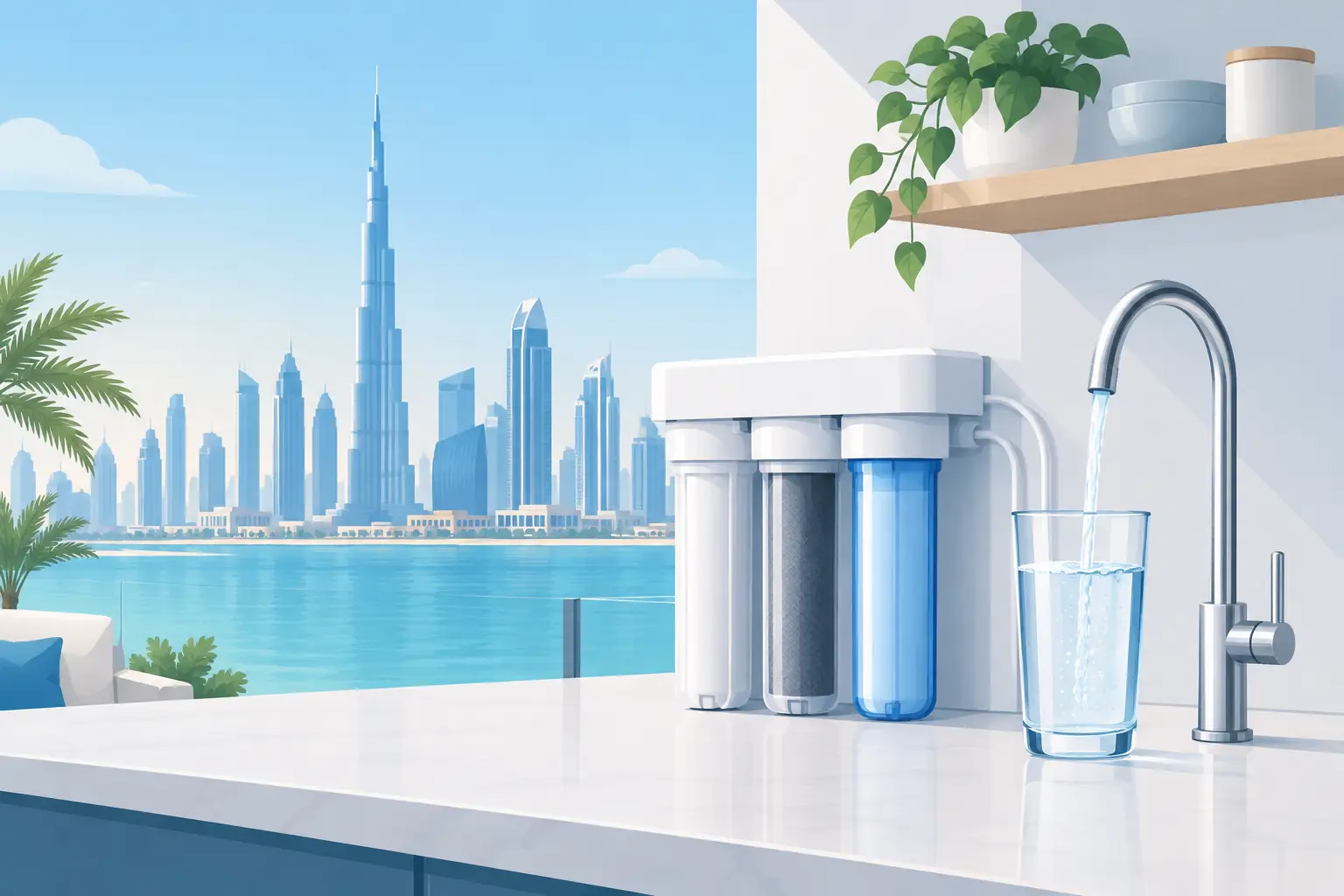
Dubai Water Filtration: What Your Home Needs
A glass of water can look perfectly clear and still leave an unpleasant taste in tea, create scale on a kettle, or raise questions about what is coming from the tap. That is why Dubai water filtration is not a one-size-fits-all purchase. The right setup depends on your water source, building plumbing, household size, and whether you want better drinking water, better water throughout the home, or both.
For many homes, the most practical answer is a reverse osmosis drinking-water system combined with pre-filtration where sediment or scale is a concern. For villas, older properties, and facilities with larger demand, whole-house filtration and water softening may also make sense. The goal is simple: water treatment that suits UAE conditions and remains easy to maintain after installation.
Why Water Quality Can Vary From Property to Property
Dubai has treated municipal water, but the water reaching your kitchen faucet can be affected by more than the original supply. Storage tanks, internal pipework, building maintenance, and local pressure all influence the water you use each day. In apartments, a rooftop or basement tank may be part of the route. In villas, larger plumbing networks and outdoor use can introduce different filtration needs.
This does not mean every property has a water-quality problem. It means the system should be selected based on the actual concern rather than assumptions. Sediment can make filters clog faster. High dissolved solids can affect taste and leave mineral deposits. Older pipes or poorly maintained tanks may call for an added level of protection before water reaches a drinking-water purifier.
A water test or an assessment by a trained technician gives a clearer starting point. TDS, or total dissolved solids, is useful for understanding the amount of dissolved material in water, but it is not a complete safety score on its own. Low TDS does not automatically prove water is safe, and high TDS does not identify every substance present. It is one practical measurement among several when choosing a filtration system.
Dubai Water Filtration Starts With the Right Goal
Before comparing system capacities, decide what you want the equipment to do. A compact under-sink RO unit is designed mainly for drinking and cooking water. A whole-house filter treats water entering the property, helping protect fixtures, appliances, and showers from sediment or other selected concerns. A softener focuses on hardness minerals that contribute to scale.
These systems often work best together, but they do different jobs. Installing a whole-house sediment filter does not create purified drinking water in the same way as reverse osmosis. Likewise, an under-sink RO system will not prevent scale buildup in showerheads or washing machines because it only serves its connected tap.
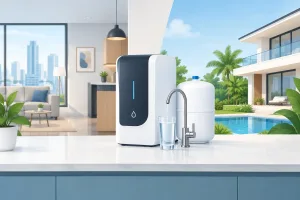
For an apartment, a drinking-water RO system is often the most direct upgrade. It can provide filtered water at the kitchen faucet without changing the entire building plumbing layout. A shower filter can be a useful separate addition for residents who want a better shower experience.
For villas, the decision may include main-line sediment filtration, a water softener, and an RO unit for the kitchen. The exact arrangement depends on water usage, available installation space, plumbing access, and the condition of the incoming water. There is no benefit in paying for an oversized treatment chain when a properly specified system will solve the real issue.
Reverse Osmosis for Drinking Water
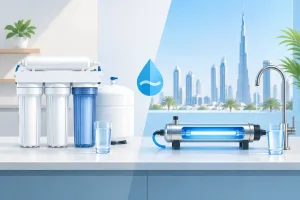
Reverse osmosis is a popular choice for homes because it reduces many dissolved solids and improves the taste of water used for drinking, ice, coffee, and cooking. Water passes through several stages, typically including sediment and carbon pre-filters before the RO membrane. The system then delivers purified water to a dedicated faucet or connected dispenser.
Capacity matters, especially in busy households. GPD means gallons per day, and it describes how much water a system can produce under suitable conditions. A 400 GPD RO system can suit many apartments and small families. Larger households, shared accommodations, offices, cafes, and commercial kitchens may need 800 GPD, 1,500 GPD, 3,000 GPD, or higher-capacity equipment.
Bigger is not always better. A high-output unit should be chosen when daily demand, simultaneous use, and refill expectations justify it. An oversized system can add unnecessary cost and take up more space. A unit that is too small, on the other hand, may struggle during peak demand and leave users waiting for filtered water.
RO systems also need regular filter replacement. Pre-filters protect the membrane, so delaying service can reduce performance and shorten component life. Replacement timing depends on water conditions and usage, but it should never be treated as optional. A good filtration system is a service commitment, not simply a device installed under the sink.
Whole-House Filtration and Softening
Whole-house filtration is installed on the main water line, before water moves through the rest of the property. This can help reduce sediment reaching faucets, showers, water heaters, washing machines, and dishwashers. It is particularly useful where visible particles, tank residue, or frequent clogging are concerns.
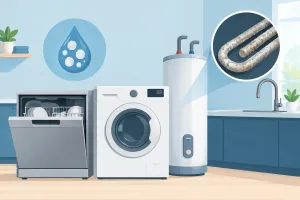
A water softener is different from a sediment filter. It is designed to address hardness minerals, which can form scale on fixtures, glass, heating elements, and appliances. In homes with recurring white buildup around faucets or reduced efficiency in water-heating equipment, softening may be worth considering.
There are trade-offs. Whole-house systems require space near the incoming line and need access for servicing. Softeners require periodic attention and must be sized correctly for water use. In an apartment, building rules and limited plumbing access may make a full-property system impractical. In that case, an under-sink RO unit and targeted shower or sediment filtration may be the more sensible solution.
Installation Quality Matters as Much as the Unit
Even a well-built purifier can underperform if installation is rushed. Correct pipe connections, drainage, water pressure, flush procedures, leak checks, and accessible filter placement all affect long-term reliability. A technician should inspect the location before selecting the final setup, particularly for larger RO systems and main-line equipment.
Professional installation also helps avoid a common frustration: a system that works well on day one but becomes difficult to service later. Filters, membranes, valves, and connections should remain accessible. The homeowner or facility manager should know what has been installed, when service is due, and whom to contact if output slows or a leak appears.
For Dubai homes and businesses, choosing a provider that handles delivery, installation, filter replacement, repairs, and maintenance can remove much of the uncertainty. Aqua Care supports this ownership journey with professionally installed systems designed for UAE water conditions, along with a one-year warranty, free delivery and installation, and ongoing service options.
Questions to Ask Before You Buy
A few clear questions can prevent the wrong purchase. Ask whether the recommendation is based on drinking-water needs or whole-property treatment. Confirm the system capacity in GPD, expected filter replacement schedule, installation requirements, and what warranty and service coverage include.
It is also wise to ask about replacement-filter availability. A filtration system is only as dependable as its ongoing maintenance. If filters are difficult to source or no service support is available, the initial saving can quickly become inconvenient.
For commercial properties, ask about peak demand rather than average use. A small office with occasional drinking-water use has different requirements from a restaurant, clinic, staff accommodation, or production facility. High-capacity systems should be selected with real daily volume, operating hours, storage needs, and service access in mind.
Keeping Your System Working Well
Once installed, simple habits protect your investment. Replace filters on schedule, arrange periodic inspections, and report changes in taste, water flow, noise, or leaks early. If your property has a storage tank, keep its cleaning and maintenance on a regular schedule as well.
Do not judge performance by taste alone. Pleasant-tasting water is welcome, but the condition of filters, membrane performance, pressure, and water quality readings provide a more complete picture. Routine service is usually easier and more affordable than responding after a system has stopped producing water properly.
The best water filtration setup is the one that fits your property, your daily use, and your ability to maintain it. Start with the water you actually need to improve, then choose equipment and service support that will still make sense long after installation day.

About author