Whole House Filter Review: What UAE Homes Need
A water filter under the kitchen sink can improve what you drink, but it does nothing for the water reaching your showers, washing machine, water heater, and bathroom taps. That difference is the starting point for this whole house filter review. A whole-house system treats water as it enters the property, helping protect plumbing and improve everyday water use from the first tap onward.
For homes in the UAE, the right choice depends on the water issue, the size of the property, and whether the goal is cleaner utility water, lower scale buildup, better drinking water, or all three. The best system is not always the largest or the most expensive. It is the one matched to your incoming water and supported with regular service.
Whole House Filter Review: What It Actually Does
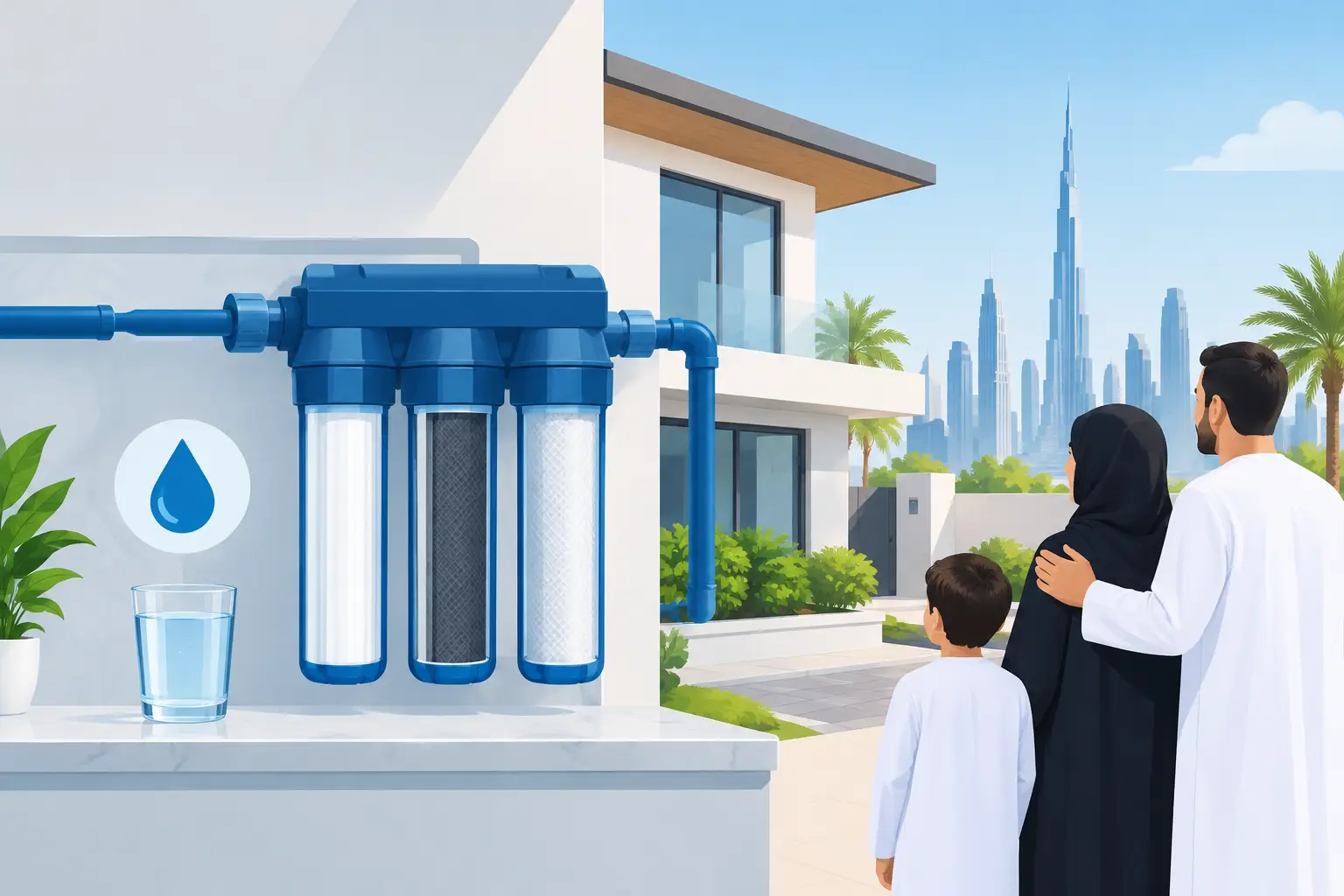
A whole-house filter, sometimes called a point-of-entry system, is installed on the main incoming water line. Every connected outlet after that point receives treated water. Depending on the media and configuration, the system may reduce sediment, rust particles, chlorine-related odor, discoloration, and some contaminants that affect taste, smell, fixtures, or appliance performance.
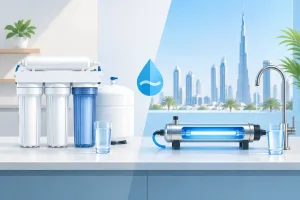
This is different from a reverse osmosis system. Reverse osmosis is usually installed at the kitchen sink and is designed to produce purified drinking water by reducing dissolved salts and other impurities. A whole-house filter handles larger volumes for bathing, cleaning, laundry, and general household use. Many villa owners benefit from using both: whole-house filtration for daily water throughout the property and RO for drinking and cooking water.
It is also important to set realistic expectations. A sediment filter can capture visible particles, but it does not soften hard water. A carbon filter can improve odor and chlorine taste, but it does not necessarily bring high TDS down to drinking-water levels. If water hardness is the concern, a dedicated water softener may be needed. If dissolved solids are the concern, RO is usually the more suitable solution at the drinking-water point.
What UAE Homeowners Should Look For
Water conditions can vary by building, tank maintenance, supply source, and pipe condition. In apartments, sediment may be linked to storage tanks or aging internal pipes. In villas, larger plumbing networks, outdoor taps, irrigation lines, and multiple bathrooms can make flow rate and capacity especially important.
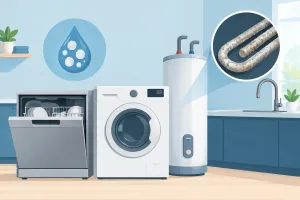
Start by identifying what you see or experience. Brown or cloudy water after tank work points toward sediment control. A noticeable chlorine smell may call for activated carbon filtration. White deposits on shower glass, faucets, and heating elements are more often a sign of hardness, which requires softening rather than simple particle filtration.
A professional water assessment helps prevent a common mistake: buying a filter based on a single complaint and finding that it does not solve the real cause. For example, replacing a sediment cartridge repeatedly will not stop limescale if the water is hard. Equally, installing a softener will not remove fine sediment before it reaches your faucets unless filtration is included as part of the system design.
Flow Rate Matters More Than Many Buyers Expect
A whole-house filter must supply enough water for the busiest moments in the home. If two showers are running while someone uses the kitchen tap and a washing machine is filling, an undersized filter can cause a frustrating pressure drop.
Ask about the system’s working flow rate, not only the size of its housing. A larger villa, shared accommodation, or property with several bathrooms needs a higher-capacity solution than a one-bedroom apartment. The pipe size and available installation space also matter. A system should fit the property without creating unnecessary restrictions in the water line.
Filter Media Should Match the Problem
Most practical whole-house setups use stages. A sediment stage is often placed first to capture sand, rust, silt, and debris before they reach finer media or household equipment. Carbon media may follow to address chlorine, odor, and some organic compounds. Where hardness is a concern, a softener can be added after pre-filtration.
This staged approach protects the more sensitive parts of the system. It can also make maintenance more cost-effective because a lower-cost sediment cartridge can be changed before accumulated particles reduce the performance of other media.
The Benefits and Trade-Offs of Whole-House Filtration
The main benefit is coverage. Filtered water reaches showers, toilets, washing machines, dishwashers, water heaters, and taps. Families often notice less visible sediment in aerators, cleaner-feeling water for bathing, and fewer particles collecting in toilet tanks or appliance inlet screens.
For property owners and facility managers, whole-house filtration can also support plumbing protection. Sediment is abrasive, and scale can affect heating elements, valves, shower heads, and equipment that uses water continuously. Filtration and softening can reduce some of that burden, though no system eliminates the need for sensible maintenance.
The trade-off is that a whole-house filter is a service item, not a fit-and-forget appliance. Cartridges and media have a working life. Their replacement schedule depends on water quality, household usage, tank condition, and system design. Leaving filters in place too long can reduce flow and may allow trapped sediment to build up.
There is also an upfront installation consideration. The system needs accessible space near the incoming line, along with proper valves and bypass arrangements. In some apartments, access may be limited or approval from building management may be required. A good installer will inspect the location before recommending equipment rather than promising a one-size-fits-all setup.
How to Compare Whole-House Filter Systems
When comparing options, avoid choosing only by the number of stages or the appearance of the filter housing. More stages do not automatically mean better water. Look at what each stage is designed to address, its flow capacity, its expected service interval, and whether replacement parts will be readily available.
A useful comparison should cover four practical questions:
- What water issue is the system designed to treat: sediment, chlorine, hardness, or a combination?
- Can it maintain suitable water pressure for the number of bathrooms and outlets in the property?
- How often will cartridges, resin, or media need service under your expected usage?
- Who will install, inspect, and maintain it if performance changes?
The last question is often the deciding factor. A lower-priced system can become inconvenient if the correct filters are hard to source or there is no technician available to diagnose low pressure, leaks, bypass issues, or poor installation. Aqua Care supports customers with delivery, professional installation, replacement filters, and ongoing maintenance so the system remains useful after installation day.
When a Whole-House Filter Is the Right Choice
A whole-house filter is a strong fit when sediment affects multiple fixtures, when the property has a large water tank or older pipework, or when homeowners want better utility water for bathing, cleaning, and appliances. It is particularly worthwhile in villas and larger homes where water passes through many outlets before it is used.
It may not be the only system needed. If your priority is low-TDS drinking water, add a properly sized reverse osmosis unit at the kitchen sink. If hard-water scale is the ongoing issue, consider a softener as part of the treatment plan. If the concern is limited to one shower, a shower filter may be a simpler and more economical starting point.
For landlords and commercial properties, the decision should include occupancy and maintenance access. A filter that works well in a family home may need a larger housing, higher flow rate, or more frequent service in a staff accommodation building, salon, restaurant, or office facility.
Installation and Maintenance Make the Difference
Correct installation is not just about connecting pipes. The technician should confirm the water direction, pressure, available space, isolation valves, and access for future filter changes. A bypass valve is useful because it allows service without stopping water to the entire property for longer than necessary.
After installation, keep a simple service record. Note the installation date, the type of cartridges or media used, and any changes in water pressure, taste, odor, or visible particles. These details help a technician identify whether the filter needs replacement, the tank needs cleaning, or another issue is affecting the supply.
A whole-house filter works best when it is treated as part of the home’s water-care plan, alongside clean storage tanks, timely filter replacement, and a drinking-water system where needed. Choose a system based on your actual water condition and daily demand, then give it the professional care that keeps every tap working as it should.


About author