How to Reduce Water Hardness at Your Home
White marks on a glass shower screen, stiff laundry, dry-feeling skin, and a kettle that builds scale quickly are familiar signs in many homes. To reduce water hardness, the right solution must address the minerals causing the problem – not simply improve taste or remove visible sediment.
Hard water is manageable, but leaving it untreated can affect fixtures, water heaters, washing machines, coffee equipment, and day-to-day cleaning. For UAE households, villas, apartments, and facilities, the most practical approach depends on where the hard water is creating the biggest issue and how much water the property uses.
What Water Hardness Means
Water hardness comes mainly from dissolved calcium and magnesium. These minerals are naturally present in many water supplies and can also be affected by storage tanks, building plumbing, and source-water conditions. They are not the same as dirt, sand, chlorine, or high total dissolved solids (TDS), although those water-quality concerns can exist at the same time.
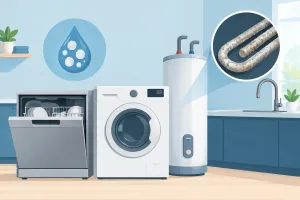
When hard water is heated or evaporates, its minerals are left behind as limescale. That is why scale appears inside kettles, on faucets, around showerheads, and in water-heating equipment. Over time, it can restrict water flow, reduce heating efficiency, and make appliances work harder than they should.
Hardness is usually measured in parts per million (ppm) or grains per gallon. A water test gives the clearest picture. Guessing based only on white spots can lead to the wrong equipment choice, especially in a building with shared tanks or varying water pressure.
Signs Your Home May Need a Water Softener
A few mineral spots are normal in many areas, but recurring scale and cleaning problems point to a broader hardness issue. Common signs include:
- White, chalky buildup on faucets, shower glass, tiles, and dishes
- Reduced flow from showerheads or tap aerators
- Soap that does not lather easily and leaves a film on skin or surfaces
- Rough towels, dull laundry, and higher detergent use
- Scale inside kettles, water heaters, washing machines, and coffee machines
- Frequent maintenance needs for hot-water equipment
These signs do not automatically mean every water problem is caused by hardness. Yellow or brown water can indicate sediment or pipe-related issues, while an unusual taste may require a separate drinking-water solution. A proper assessment prevents paying for treatment that does not match the problem.
The Most Effective Way to Reduce Water Hardness
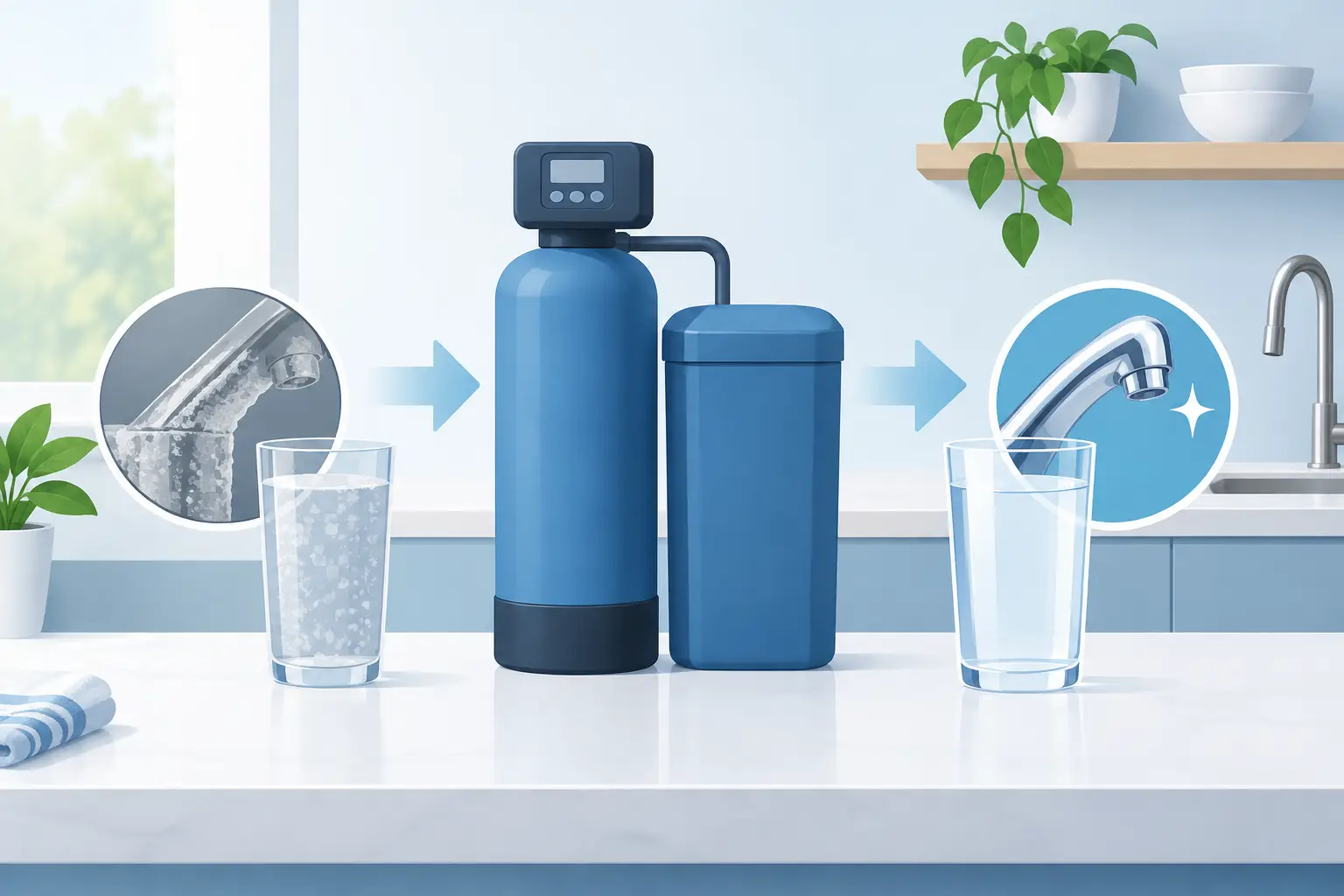
For whole-home hardness control, an ion-exchange water softener is usually the most reliable choice. The system uses resin media to capture calcium and magnesium and replace them with sodium or potassium ions. This process genuinely softens the water before it reaches showers, faucets, water heaters, and connected appliances.
A softener is commonly installed at the main incoming water line, after sediment pre-filtration where needed. Positioning matters. Treating water before it enters the home helps protect the full plumbing network rather than only one outlet.
The system needs periodic regeneration to rinse the captured minerals from the resin. Most residential units use salt for this process. Modern metered softeners can regenerate based on actual water use, which is generally more efficient than running on a fixed schedule. The correct size should be based on hardness level, household size, daily consumption, and peak demand – not only the number of bathrooms.
For larger villas, staff accommodation, restaurants, laundries, and commercial sites, capacity and flow rate are especially important. An undersized unit can cause pressure loss or run out of softened water during busy periods. A correctly sized commercial system offers more consistent performance and simpler maintenance planning.
Water Softener, Filter, or Reverse Osmosis System?
These systems solve different problems, and many properties benefit from more than one.
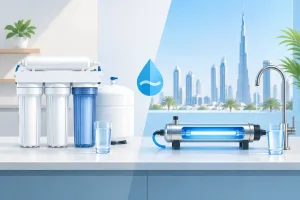
A sediment filter captures sand, rust, and suspended particles. It helps protect downstream equipment but does not remove dissolved hardness minerals. Carbon filtration can improve chlorine-related taste and odor, yet it is not a substitute for softening either.
A water softener is designed to reduce hardness at the point where water enters the property. It is the best option when scale, soap performance, plumbing protection, and appliance care are the priorities.
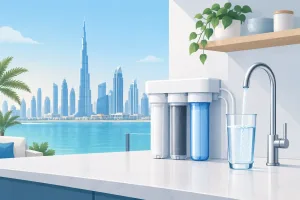
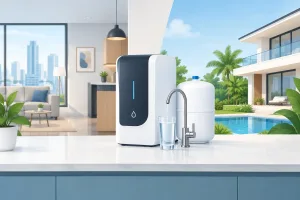
A reverse osmosis system is intended mainly for purified drinking and cooking water. It reduces a wide range of dissolved contaminants and lowers TDS at a dedicated drinking-water tap. While RO can reduce mineral content in its own output, it does not protect the shower, washing machine, or water heater unless every household outlet is supplied through a much larger treatment design.
For many homes, the practical combination is whole-house pre-filtration and softening, plus an under-sink RO system for drinking water. This separates two needs clearly: softer water for the home and highly purified water for the kitchen.
Can You Reduce Water Hardness Without a Water Softener?
Short-term measures can control the visible effects, but they do not remove hardness from the water supply. Vinegar-based cleaning can dissolve light scale from shower glass, faucet aerators, and kettles. Using a descaling cycle in appliances and choosing detergents made for hard water may also help.
These methods are useful for maintenance, not prevention. If scale returns quickly, cleaning becomes a recurring cost in time, products, and possible appliance repairs. Magnetic or electronic devices are sometimes marketed as salt-free alternatives, but their results vary significantly with water chemistry, flow, and installation conditions. They may change how some minerals behave, but they do not provide the dependable hardness removal of a properly specified ion-exchange softener.
Salt-free conditioners can be suitable in selected situations where salt use or drainage is restricted. Still, customers should understand the trade-off: they may help reduce scale adhesion, but they do not produce softened water in the same way as a conventional softener.
Choosing the Right System for a UAE Property
The best system starts with testing and a site review. In apartments, available space, drain access, building rules, and whether water enters through a central tank can affect the installation plan. In villas, the incoming line, irrigation connections, hot-water system, and family water use should all be considered.
Ask for clear answers on resin capacity, regeneration method, salt requirements, water pressure, drain connection, and service intervals. It is also worth checking whether the installer will handle filter changes, system checks, and repairs after installation. A softener is not a fit-and-forget appliance. It performs best when its settings, salt level, and pre-filters are kept in good condition.
Aqua Care designs and installs water-treatment systems for local conditions, with professional assessment, installation, and ongoing service support. That matters because a system that looks suitable on paper may need adjustments for tank-fed supply, household demand, or existing plumbing at the property.
How often does a water softener need maintenance?
Most systems need the salt level checked regularly and pre-filters replaced on schedule. The exact frequency depends on water hardness, system size, and water use. Resin can last for years when the system is correctly installed and maintained, but a technician should inspect valves, settings, and performance periodically.
Is softened water safe for bathing and washing?
Yes. Softened water is widely used for showers, laundry, and cleaning. It can make soap rinse more effectively and reduce scale on bathroom fixtures. For drinking water, many households prefer a separate RO system so their kitchen water receives dedicated purification.
Will a water softener lower my water bill?
It may not directly reduce consumption, but it can reduce the impact of scale on water heaters and appliances. Softer water also often requires less soap and detergent. The bigger value is usually longer equipment life, easier cleaning, and fewer scale-related service issues.
A home should not have to work around its water. If scale is taking over your fixtures or equipment, start with a water test and choose treatment based on what is actually flowing through your plumbing. The right system makes cleaner bathrooms, better-performing appliances, and dependable water care part of everyday life.


About author