Can Hard Water Damage Appliances at Home?
Can hard water damage appliances? Yes. The issue is rarely a sudden breakdown that points clearly to the water supply. More often, it is a slow buildup of calcium and magnesium minerals inside equipment that uses, heats, or circulates water. A water heater takes longer to heat, a washing machine leaves clothes feeling stiff, or a dishwasher starts producing cloudy glasses. By the time the signs are obvious, mineral scale may already be affecting performance.
For households, landlords, and facility managers, the practical concern is not only repair costs. Scale can increase energy use, shorten the service life of valuable equipment, and create avoidable maintenance calls. The level of risk depends on your water hardness, daily water use, appliance type, and maintenance habits.
How hard water damages appliances
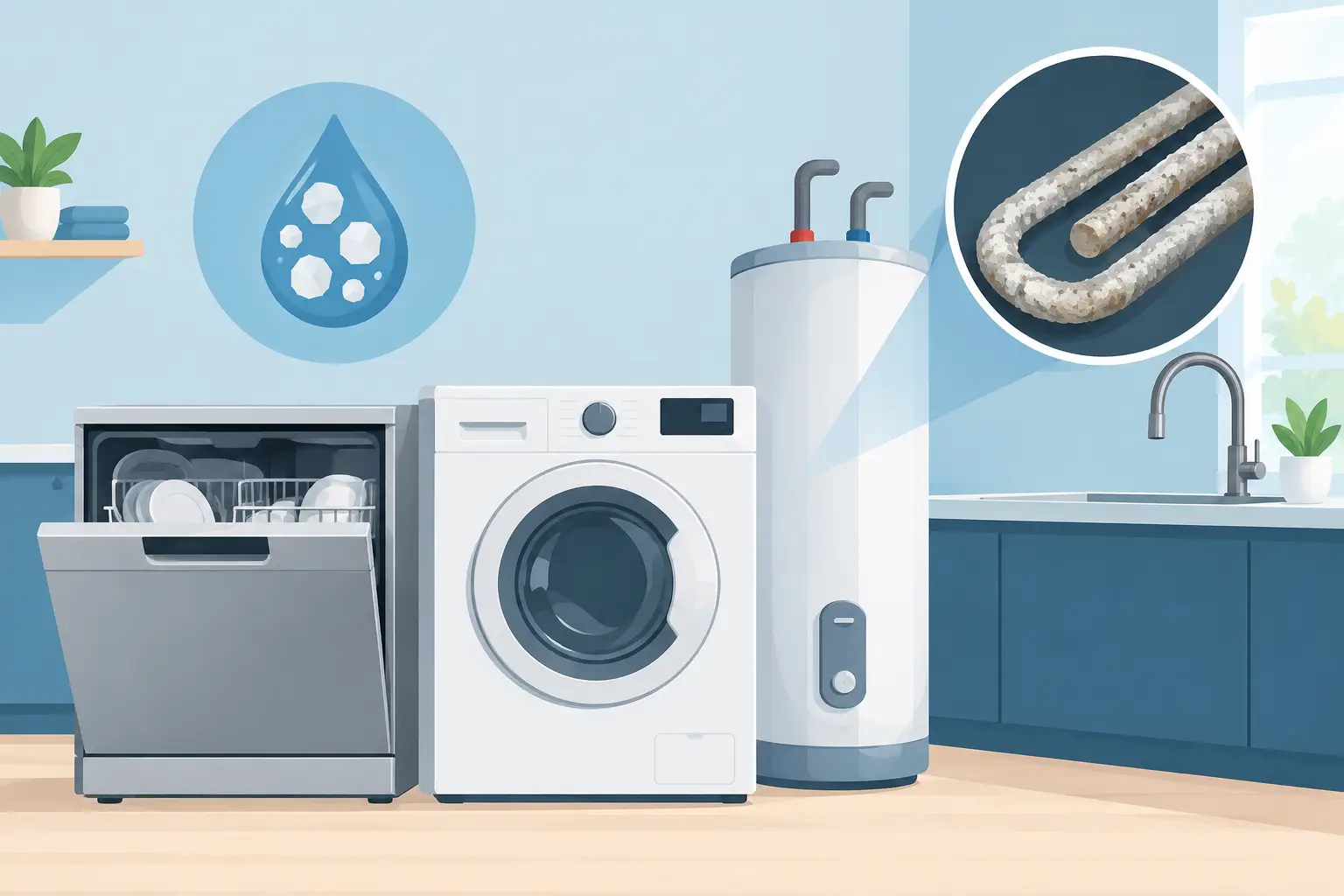
Hard water contains dissolved minerals, mainly calcium and magnesium. When water is heated or evaporates, these minerals can separate from the water and settle as a hard, chalky deposit called limescale. You may see it around faucets and showerheads, but the more costly deposits are often hidden inside pipes, heating elements, valves, and appliance hoses.
Heat speeds up the process. This is why water heaters, coffee machines, kettles, dishwashers, and washing machines are especially vulnerable. Even appliances that do not heat water can develop scale where water sits, flows slowly, or dries after a cycle.
Scale acts like insulation on a heating element. Instead of transferring heat efficiently to water, the element has to work harder and run longer. Over time, that strain can contribute to higher electricity consumption, reduced output, and component failure. Mineral deposits can also narrow water passages, interfere with sensors, and prevent valves from closing or opening properly.
Hard water does not damage every appliance at the same speed. A small household with moderate hardness may only need routine cleaning and periodic descaling. A large villa, a busy commercial kitchen, or a building with consistently hard water can see buildup much faster. That is why water treatment should be matched to the property and its actual use rather than chosen as a one-size-fits-all solution.
Which appliances are most at risk?
Water heaters and boilers
Water heaters are usually the first major concern because they combine heat, stored water, and frequent operation. Sediment and scale can collect at the bottom of a tank or form directly on heating elements. Common symptoms include rumbling or popping noises, slower hot-water recovery, inconsistent water temperature, and higher energy bills.
In tankless heaters, narrow internal channels can become restricted by mineral buildup. Regular flushing may help, but homes with persistent hard water often benefit from treating the water before it enters the heater. For commercial boilers and high-demand hot-water systems, a proper assessment is particularly valuable because the cost of downtime can be significant.
Dishwashers
Hard water can leave white spots or a cloudy film on glassware, dishes, and the dishwasher interior. Detergent also becomes less effective because minerals in the water interfere with its cleaning action. You may find yourself using more detergent without getting better results.
Inside the machine, scale can affect spray arms, heating components, filters, and water inlets. A dishwasher may still run, but its cleaning quality can decline gradually. Cleaning filters and using a suitable descaling product can help, although this does not stop new minerals from entering with each cycle.
Washing machines
Mineral deposits can collect in hoses, valves, drums, and heating components. More noticeably, hard water can make detergent less effective and leave residue on fabrics. Whites may look dull, towels can feel rough, and clothes may not feel as fresh after washing.
Using extra detergent is not always the answer. Too much detergent can create additional residue in the machine and on fabrics. A water softener can reduce mineral interference, helping detergent work more efficiently while protecting the washing machine’s internal components.
Coffee machines, kettles, and ice makers
Small appliances show scale quickly because their water pathways are compact and often heated. A kettle may develop visible white deposits. A coffee machine can brew more slowly or produce an altered taste. Ice makers may make smaller, cloudy, or irregular ice cubes when mineral deposits affect water flow.
These appliances can usually be descaled, but repeated descaling is a maintenance response, not a permanent fix. If scale returns rapidly, it is worth looking at the water source and considering point-of-use filtration or softening where appropriate.
Faucets, shower fixtures, and plumbing
Although these are not appliances, they are part of the same problem. Scale can clog aerators, restrict shower spray, stain fixtures, and reduce flow. In plumbing lines, extensive buildup can contribute to poor water pressure and costly maintenance over time.
Signs that hard water is already affecting your equipment
Visible white crust near faucets is an easy clue, but it is not the only one. Watch for appliances taking longer to heat water, hot water running out sooner than usual, reduced dishwasher performance, cloudy glassware, stiff laundry, weak shower pressure, or recurring leaks around valves and connectors.
A sudden failure can have many causes, so it should not automatically be blamed on hard water. However, when several water-using appliances show similar symptoms, mineral buildup is a likely factor. A water test can identify hardness levels and help distinguish a scale issue from problems such as sediment, high total dissolved solids, pressure concerns, or aging equipment.
Can filters prevent appliance damage?
It depends on the type of filter. A sediment filter captures physical particles such as sand, rust, and debris. It protects fixtures and equipment from blockage caused by those particles, but it does not remove dissolved hardness minerals.
A drinking-water reverse osmosis system is excellent for improving the quality of water at a dedicated kitchen tap. It can reduce many dissolved contaminants and lower TDS for drinking and cooking water. However, it does not protect a water heater, washing machine, or dishwasher unless the system is designed to supply those appliances, which is not the usual setup.
For whole-home protection against hard water, a water softener is often the more direct solution. It is installed on the main water line and reduces the calcium and magnesium that form scale. In some properties, the best setup combines sediment filtration, whole-house softening, and a separate reverse osmosis system for clean drinking water.
This approach is especially useful in Dubai and across the UAE, where property water conditions and storage arrangements can vary. A professional assessment can determine whether the priority is hardness reduction, sediment control, drinking-water filtration, or a combination of all three.
Practical ways to protect appliances now
Start with basic maintenance. Follow the manufacturer’s guidance for cleaning filters, flushing heaters, and descaling small appliances. Do not wait until performance drops sharply. Preventive care is generally less expensive than replacing a heating element, valve, pump, or appliance.
Next, avoid guessing at the water issue. A technician can test the water and review where it enters the property, whether there is a storage tank, which appliances are affected, and how much water the household or facility uses. This matters because undersized treatment equipment may struggle to keep up with demand, while unnecessary equipment adds cost without solving the actual problem.
For a whole-home softener, ask about capacity, installation location, drainage requirements, salt use where applicable, and service intervals. For filtration, ask which contaminants the system is designed to address and when cartridges need replacement. Reliable installation and scheduled maintenance are as important as the equipment itself.
Aqua Care helps homeowners and commercial customers choose water treatment systems suited to local conditions, with professional installation and ongoing support. The goal is straightforward: protect the water you use every day and reduce the strain it places on the equipment you depend on.
If you are already seeing scale on fixtures or changes in appliance performance, treat it as an early warning rather than a cosmetic inconvenience. A simple water assessment and the right treatment plan can help your appliances work efficiently for longer, while making daily water use more comfortable at the same time.

About author